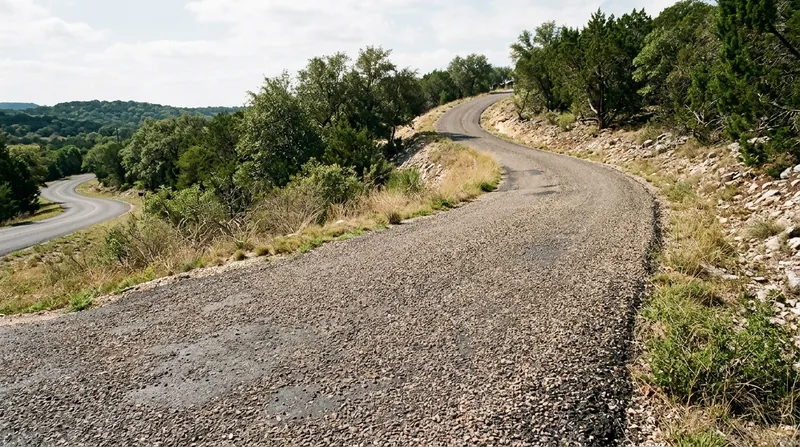




Tar and chip driveways in San Antonio give Hill Country properties a durable, textured surface that grips limestone ground and sheds the region's sudden downpours. Where shallow caliche and uneven bedrock make a smooth asphalt finish difficult, tar and chip delivers both function and a natural appearance that works with the landscape. We spray a tack coat, embed aggregate into the binder, and roll the surface flat so water runs off fast and vehicle traffic stays sure-footed through wet weather. This method costs less than full asphalt and lasts eight to ten years with routine maintenance. If your driveway sits on Hill Country terrain or you want a grip surface over uneven ground, tar and chip is worth considering. Call us at (210) 485-4679 for a free estimate, or read on to understand how this surface performs in San Antonio's climate.
Why Tar and Chip Works for San Antonio Driveways on Limestone and Caliche
San Antonio's North and West subdivisions sit on thin Hill Country limestone and caliche, where standard asphalt struggles with uneven base settlement. Tar and chip is designed for exactly this terrain. The aggregate locks into the tack coat and creates a grippy, textured finish that does not depend on a perfectly flat subgrade. Flash-flood storms and triple-digit summer heat are the dominant failure modes here, and a properly pitched tar and chip surface sheds both. The material stays flexible enough to move with seasonal ground shifts, and the open-texture top layer prevents standing water and rutting from loaded traffic.
- Aggregate embeds into the tack coat and creates grip without requiring a smooth, perfectly compacted base.
- Water drains through the texture rather than pooling, which prevents the freeze-thaw damage that does not occur here but does prevent standing water that feeds cracking.
- The surface moves with seasonal ground shift and limestone settling, resisting the alligator cracking that kills asphalt over unstable caliche.
- Material cost is lower than hot mix asphalt, making it a smart choice for larger driveways and private roads.
- Maintenance is simpler: raking out debris and light re-chipping when traffic wears the top coat, not seal coating.
Tar and chip is not a permanent surface, but on Hill Country ground, it often outlasts asphalt that cracks through a failed base.
Local example: A ranch property in Boerne on limestone bedrock chose tar and chip over asphalt because the ground moves seasonally and the budget was tight. Eight years later, the driveway still sheds water, has not cracked, and cost half what asphalt replacement would have run. The trade-off is that it needs raking and occasional chip top-up, but the base has not failed.
For more on how San Antonio's terrain affects driveway choice, see our asphalt resurfacing and overlay guide, which covers the decision between repair, resurfacing, and replacement across all surface types.
How We Install Tar and Chip Driveways in San Antonio
Installation is a four-step process that depends on precise timing and temperature. The ground must be dry, the air warm enough for the binder to cure, and the aggregate sized to lock into the tack coat without rolling off under traffic. We start with grading and base prep, then spray the tack coat, embed the aggregate, and finish with rolling and compaction. The whole job takes one to two days for a typical residential driveway, and the surface is ready for light traffic within 48 hours.
- We grade the subgrade, remove high spots and fill low spots so water pitches toward the street and away from the house.
- We spray an even tack coat across the prepared surface using calibrated equipment to ensure proper coverage and adhesion.
- We spread aggregate (stone chips, usually limestone or granite) at the specified rate, measured in tons per square yard.
- We roll the surface with a heavy compactor to lock the aggregate into the binder and create a tight, grippy finish.
- We allow 48 hours of curing before you drive on it, and full cure takes about two weeks before we recommend heavy traffic or parking.
The key to longevity is proper grading and aggregate sizing. If water does not shed, or if the aggregate is too fine and washes out in the first rain, the surface will fail early.
San Antonio example: A three-car driveway apron in Universal City was graded to pitch 2 percent toward the street, surfaced with 3/4-inch limestone chip at 125 pounds per square yard, and rolled tight. The first summer storm hit within a week, and the surface held. Five years later, the top quarter-inch has worn smooth in the wheel tracks, but the base is still intact and the driveway is ready for a light chip top-up.
For detailed information on how base preparation affects all asphalt surfaces, see our gravel driveway and grading page, which covers subgrade and drainage principles that apply to tar and chip as well.
Tar and Chip Methods and Materials for San Antonio Driveways
| Approach | Description | Best for |
|---|---|---|
| New tar and chip installation | Graded subgrade, tack coat, aggregate embed, and compaction on bare ground or after milling. | New driveways, complete replacements, or ground that has been cleared to subgrade. |
| Tar and chip overlay on existing asphalt | Tack coat sprayed over sound (non-cracked) asphalt, aggregate embedded, and rolled. | Worn asphalt with good base and no alligator cracking; extends life and adds grip. |
| Chip top-up and re-rolling | Add fresh aggregate to worn areas and re-roll to tighten and restore texture. | Existing tar and chip driveways with smooth wheel tracks but intact base. |
| Limestone versus granite chip | Limestone is local and cost-effective; granite is harder and lasts longer but costs more. | Hill Country properties with limestone base choose local limestone; high-traffic driveways benefit from granite durability. |
Tar and Chip Driveways Cost in San Antonio: What to Expect
Tar and chip costs less than asphalt because there is no hot-mix plant, no paving equipment, and less labor per square foot. Pricing starts at $5 per square foot and moves up based on subgrade condition, aggregate type, and site access. A 500-square-foot driveway typically runs $2,500 to $3,500 before any grading work. If the ground is uneven or compacted poorly, subgrade prep adds $500 to $1,500. Granite chip costs more than limestone, and larger jobs are cheaper per square foot than small ones because setup and mobilization spread across more area.
The honest conversation is that tar and chip is not a one-time cost. You will rake debris, fill washouts, and add a light chip top-up every three to five years. That maintenance costs $200 to $600 per visit and keeps the surface tight and grippy. Over ten years, tar and chip with maintenance costs less than asphalt with seal coating, but you must budget for it.
We provide a free written estimate with tonnage specs and square footage so you know exactly what you are paying for. Call (210) 485-4679 or visit our pricing page for ballpark ranges on all our services.
Tar and Chip Driveways Near Me: What San Antonio Homeowners Should Know When Hiring
Hiring a paving contractor for tar and chip is straightforward if you know what to check. Get at least two written estimates with tonnage, square footage, and aggregate type listed. Verify that the contractor is insured and ask for a certificate of insurance. Ask for references from driveways installed in the last three years in San Antonio or nearby areas, and call at least one. If your driveway sits in an HOA community, check the architectural guidelines before you commit, because some HOAs restrict tar and chip and require asphalt. If the driveway apron touches the street right-of-way, your city may require a permit or a licensed right-of-way contractor. San Antonio requires municipal contractor registration before any permit is pulled, so ask your contractor whether they are registered with the City.
- Get a written estimate that lists square footage, tonnage per square yard, and aggregate type so you can compare apples to apples.
- Ask whether the estimate includes grading, base prep, tack coat, aggregate, and compaction, or whether any of those are add-ons.
- Request references from completed tar and chip driveways in San Antonio, Boerne, or nearby Hill Country areas.
- Verify that the contractor carries general liability insurance and ask for a copy of the insurance certificate.
- Check with your HOA before you sign a contract if you live in a master-planned community, because architectural standards vary.
- Ask your city or county whether a permit is required for driveway work in your jurisdiction, and confirm that your contractor understands the local rules.
The biggest red flag is a contractor who shows up unsolicited with no written contract, asks for a large cash deposit, or quotes a price that seems too low. Honest paving shops in San Antonio have a local address and local plates, provide written estimates, and stand behind their work.
For more guidance on choosing a contractor and understanding the paving process, contact us at san-antonio-asphalt.com/contact or call (210) 485-4679 for a free estimate and honest advice about whether tar and chip or another surface is right for your property.
Tar & Chip Driveways in San Antonio: Pricing Guide
| Service | Price | Details |
|---|---|---|
| Tar and chip driveway installation | Starting at $5/sq ft | Includes grading, tack coat, aggregate embed, and compaction on prepared subgrade or existing asphalt |
| Subgrade prep and grading | $500-$1,500 | Leveling, fill, and drainage pitch when ground is uneven or compacted poorly before tar and chip |
| Granite versus limestone chip | $0.50-$1.00 per sq ft difference | Granite is harder and lasts longer; limestone is local and cost-effective for Hill Country terrain |
| Chip top-up and re-rolling maintenance | $200-$600 per visit | Refresh worn areas with fresh aggregate and re-roll every three to five years to maintain grip and shed water |
| Free estimate | No charge | Written estimate with tonnage and square footage, response within 24 hours, no obligation to book |
Indicative pricing, the exact cost depends on square footage, finish, and site access. Free personalized estimate within 24h at (210) 485-4679.


