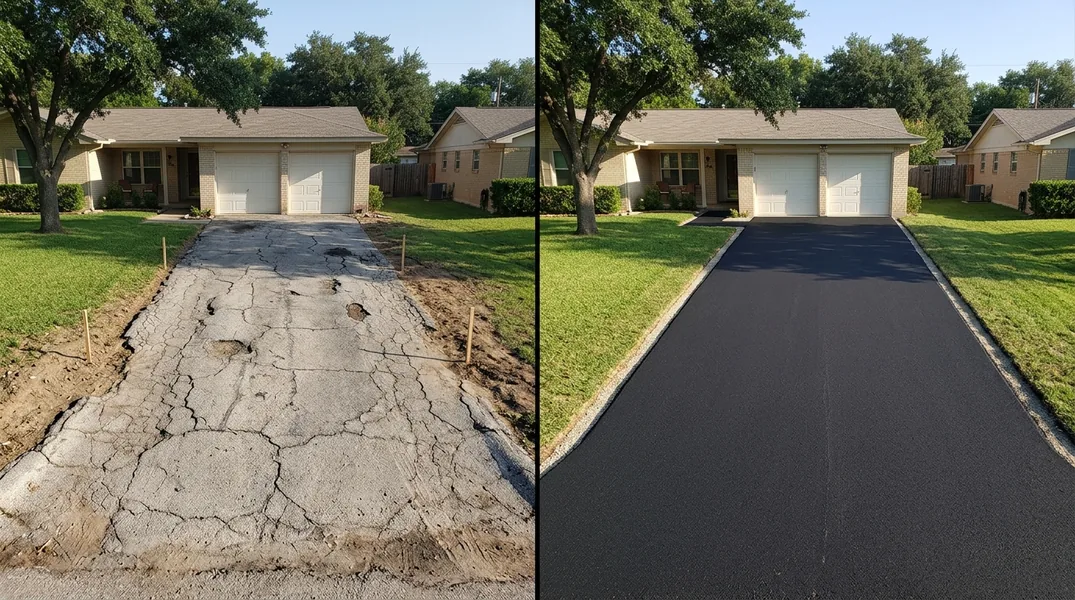
Understanding San Antonio's Unique Clay Soil Challenge
San Antonio homeowners face a distinctive landscaping challenge that many other regions don't encounter to the same degree: expansive clay soil. This type of soil is common throughout central Texas and creates significant movement as it expands when wet and contracts when dry. If you're planning a new driveway or replacing an old one, understanding how your soil composition affects your choice between asphalt and concrete is crucial to making a decision that will protect your investment for years to come.
Clay soil expansion and contraction cycles put tremendous stress on any surface laid on top of it. When clay absorbs moisture during heavy rains or irrigation, it swells substantially. Conversely, during dry spells, it shrinks and pulls away from the surface above. This constant movement is the enemy of both asphalt and concrete, but these two materials respond to the stress in very different ways. Before deciding between an asphalt vs concrete driveway, you need to understand how each material handles the unique demands of San Antonio's soil conditions.
Asphalt vs Concrete Driveway Performance in Clay Soil
When comparing asphalt vs concrete driveway options for clay soil, the answer isn't as straightforward as many homeowners hope. Concrete, while appearing more durable on the surface, actually struggles significantly with expansive clay. As the soil beneath shifts, concrete slabs crack, heave, and develop uneven surfaces. These aren't minor cosmetic issues, either. A cracked concrete driveway can allow water to seep beneath the surface, accelerating the damage cycle and leading to costly repairs or complete replacement within 15 to 20 years, depending on the severity of soil movement.
Asphalt, on the other hand, offers more flexibility. The material's inherent elasticity allows it to flex and move slightly as the ground shifts beneath it, rather than cracking under pressure. This doesn't mean asphalt is immune to clay soil problems, but it does mean it handles the stress more gracefully. Asphalt Driveway Paving & Installation in clay soil conditions is often the smarter choice when you factor in long-term durability and maintenance costs. However, the key to maximizing asphalt's performance is proper installation with adequate base preparation and drainage solutions.
Asphalt Driveway Lifespan: What to Expect in San Antonio
The asphalt driveway lifespan depends heavily on several factors, with soil conditions and maintenance being the most critical. In ideal conditions with stable soil, a well-installed asphalt driveway typically lasts 15 to 20 years. In San Antonio's clay soil environment, you can reasonably expect 12 to 18 years if you commit to proper maintenance. This is still competitive with concrete when you consider that concrete in clay soil often requires expensive repairs well before reaching the end of its theoretical lifespan.
The longevity of your blacktop driveway also depends on how well you maintain it. Regular seal coating every two to three years protects the asphalt from UV damage and water penetration, both of which accelerate deterioration. Prompt attention to small cracks and potholes prevents them from expanding into larger, more expensive problems. Many homeowners find that investing in preventative maintenance actually extends their asphalt driveway lifespan by several years, making the total cost of ownership lower than concrete alternatives. If you're concerned about your current driveway's condition, San Antonio Asphalt Paving can assess your surface and recommend whether maintenance, Asphalt Resurfacing & Overlay, or Driveway Repair options make sense for your situation.
Cost Comparison: Asphalt vs Concrete in Clay Soil Conditions
Initial installation costs favor asphalt, which typically runs 30 to 40 percent less than concrete for new driveway installation. However, the real financial story emerges over time. Concrete may seem like a one-time investment, but clay soil movement often triggers cracking and heaving that requires expensive repairs or full replacement. Asphalt's lower upfront cost combined with manageable maintenance expenses often results in lower total cost of ownership over 15 to 20 years, especially when you factor in the concrete repairs that clay soil typically demands.
When budgeting for your driveway project, consider not just the initial installation but also the long-term maintenance requirements. Asphalt requires seal coating and occasional patching, while concrete may require mudjacking to level heaved sections, crack filling, and eventually replacement. To understand the specific costs for your property and soil conditions, reach out to San Antonio Asphalt Paving at (210) 485-4679 for a free estimate. We can assess your site, discuss your options, and provide transparent pricing so you can make an informed decision.
Proper Installation and Drainage: The Key to Asphalt Success
The difference between an asphalt driveway that thrives for 18 years and one that fails in 10 comes down to installation quality and drainage design. In clay soil, water management is absolutely critical. If water pools beneath your asphalt surface or saturates the clay below, you're accelerating the expansion and contraction cycles that damage the driveway. Professional installation includes proper grading to ensure water runs off the surface, adequate base preparation with crushed stone or recycled asphalt, and sometimes French drains or perimeter drainage to manage subsurface water.
This is why choosing an experienced contractor matters tremendously. When you opt for Asphalt Driveway Paving & Installation with San Antonio Asphalt Paving, you're getting professionals who understand the specific challenges of local soil conditions. We don't just pour asphalt, we engineer solutions that account for clay soil movement and moisture patterns. Proper installation upfront saves you thousands in repairs and extends your driveway's life significantly.
Should You Consider Asphalt Over Concrete Driveway?
For most San Antonio homeowners dealing with clay soil, the answer is yes. An asphalt over concrete driveway strategy isn't typically recommended, as the two materials expand and contract at different rates, leading to separation and failure. Instead, if you're replacing a failed concrete driveway, removing it and installing quality asphalt is the better path. The flexibility of asphalt, combined with its lower cost and proven performance in clay soil conditions, makes it the logical choice for most residential applications in our area.
That said, your specific situation may have unique factors. Some homeowners prefer concrete's aesthetic appearance or lower maintenance perception, and in certain soil conditions with excellent drainage, concrete can perform adequately. The best way to determine what's right for your property is to consult with professionals who know San Antonio's soil and climate conditions intimately. Contact San Antonio Asphalt Paving today at (210) 485-4679 or request a free estimate to discuss your driveway needs. We'll evaluate your site, answer your questions about asphalt vs concrete performance, and help you choose the solution that provides the best long-term value for your home.
Looking for a professional asphalt paving contractor in San Antonio? San Antonio Asphalt Paving responds fast for all your asphalt paving needs.
Get a Free Quote