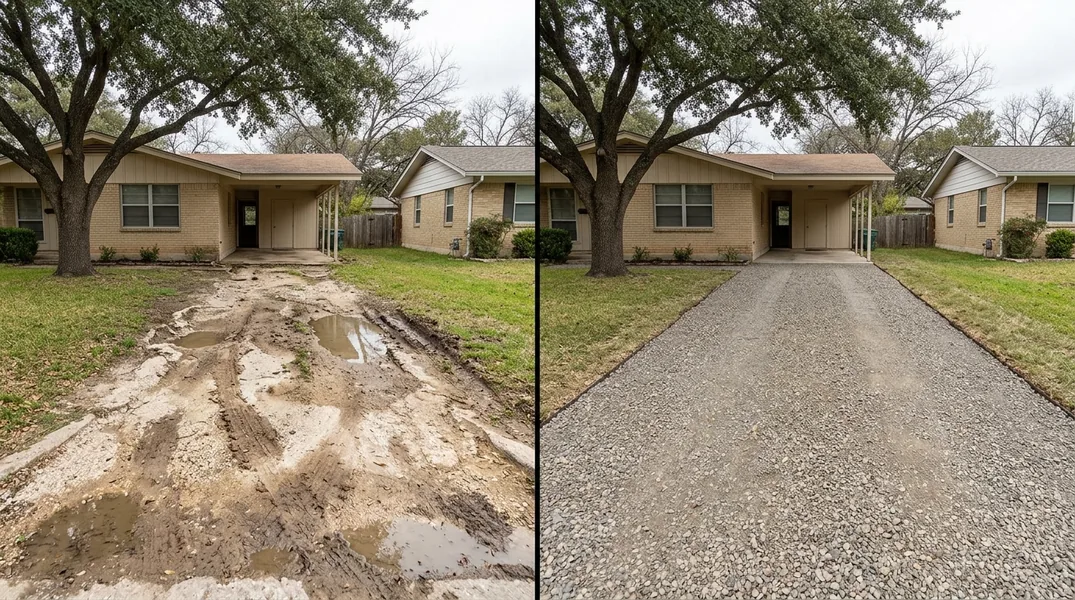
Understanding San Antonio's Soil: The Root Cause of Driveway Damage
San Antonio sits at the crossroads of two distinct geological regions, and this geography directly impacts your driveway's lifespan. The city's foundation consists primarily of Blackland Prairie clay in some areas and Hill Country caliche in others. These soil types don't just affect landscaping or foundation work; they fundamentally influence how your asphalt driveway expands, contracts, and ultimately fails.
Blackland Prairie clay is particularly problematic for driveways because it's highly expansive. When it absorbs moisture during our Texas rainy seasons, it swells significantly. Conversely, during dry spells, it shrinks and creates voids beneath the surface. This constant expansion and contraction places immense pressure on your asphalt from below, causing the surface to crack, buckle, and eventually fail. Hill Country caliche, a calcium carbonate-rich rock layer, presents a different challenge. While harder than clay, caliche is brittle and doesn't compress evenly. It can shift unpredictably, creating an unstable base that leads to uneven settling and stress fractures in the asphalt above.
Frost Heave and Freeze-Thaw Cycles: Winter's Impact on Your Driveway
Though San Antonio doesn't experience harsh winters compared to northern states, we still face freeze-thaw cycles that damage driveways. When moisture in the soil freezes, it expands, pushing upward against the asphalt. This phenomenon, called frost heave, creates the telltale humps and cracks you see in late winter and early spring. The problem is magnified when you have Blackland Prairie clay because it retains water longer and more intensely than other soil types.
The freeze-thaw cycle is particularly damaging because it's repetitive. Water seeps into small cracks in your asphalt, freezes overnight, expands, and widens the crack further. The next day, the ice melts and the asphalt settles unevenly. Over several freeze-thaw cycles, these small cracks become large fissures. This is why Driveway Repair is often necessary after our winter months, even though we rarely see snow on the ground.
Potholes and Surface Damage: From Cracks to Costly Repairs
Once cracks form in your asphalt driveway, they don't stay small for long. Water enters the cracks and weakens the base layer, which is especially vulnerable when built on unstable Blackland Prairie clay or caliche. The asphalt surface loses support from below, and the weight of vehicles passing over the weakened area causes the pavement to break apart, creating potholes. What started as a minor crack can quickly become a safety hazard and a sign that more extensive damage is occurring beneath the surface.
Pothole Repair & Asphalt Patching can address individual problem areas, but it's important to understand that patching is a temporary solution when the underlying soil is unstable. A patch will last longer if the base is properly prepared and if drainage issues are resolved, but if your driveway is settling unevenly due to clay expansion or caliche shifting, new patches will likely fail within a few years. This is why understanding your soil type and the root cause of the damage is crucial before deciding on a repair strategy.
Repair vs. Replace: Making the Right Decision for Your Driveway
The question of whether to repair or replace your asphalt driveway depends on several factors, including the extent of damage, the condition of the base layer, and the underlying soil stability. If your driveway has only isolated cracks and potholes, and the base layer is still solid, targeted Pothole Repair & Asphalt Patching or Asphalt Resurfacing & Overlay may be sufficient. However, if you're seeing widespread cracking, multiple potholes, or evidence of base failure (such as the asphalt moving or settling unevenly), replacement may be the more cost-effective option in the long run.
When deciding to replace your driveway, addressing the soil issue becomes critical. A professional asphalt contractor should evaluate the base preparation, ensure proper drainage to prevent water accumulation, and potentially recommend stabilization methods for problematic soil. Simply laying new asphalt over a failing base will only delay the problem. This is why we recommend getting a free estimate from San Antonio Asphalt Paving that includes a thorough assessment of your driveway's foundation, not just the surface.
Prevention Strategies: Protecting Your Driveway from Soil-Related Damage
The best approach to dealing with Blackland Prairie clay and Hill Country caliche is prevention. Proper drainage is your first line of defense. Water should flow away from your driveway, not pool on or beneath it. If your driveway is lower than surrounding areas or slopes toward your home, you may need to grade the landscape or install drainage solutions. Seal coating your asphalt every two to three years creates a protective barrier that slows water penetration, giving you time to address small cracks before they become major problems.
Regular maintenance and prompt repairs also extend your driveway's life. Small cracks should be sealed immediately to prevent water infiltration. If you notice your driveway is cracking in a pattern or settling unevenly, contact San Antonio Asphalt Paving at (210) 485-4679 to investigate. Early intervention can prevent expensive repairs down the road. Additionally, avoid allowing heavy vehicles to park in the same spot repeatedly, as this concentrates stress on the asphalt and accelerates failure, especially when the base is unstable.
When to Call a Professional: Asphalt Driveway Paving & Installation Near Me
If you're experiencing recurring driveway problems, it's time to call a professional. San Antonio Asphalt Paving specializes in understanding the unique challenges posed by our local soil conditions. We don't just patch potholes or overlay failing asphalt; we diagnose the root cause and recommend solutions that actually work. Whether your driveway needs Asphalt Driveway Paving & Installation, repair, or resurfacing, we assess your specific situation and soil type before recommending a course of action.
Don't let another season of freeze-thaw cycles or clay expansion damage your driveway further. Contact San Antonio Asphalt Paving today for a free estimate. Call us at (210) 485-4679 or visit our website at https://san-antonio-asphalt.com to schedule your driveway evaluation. We serve the entire San Antonio area and are ready to help you understand why your driveway cracks and what you can do about it.
Looking for a professional asphalt paving contractor in San Antonio? San Antonio Asphalt Paving responds fast for all your asphalt paving needs.
Get a Free Quote