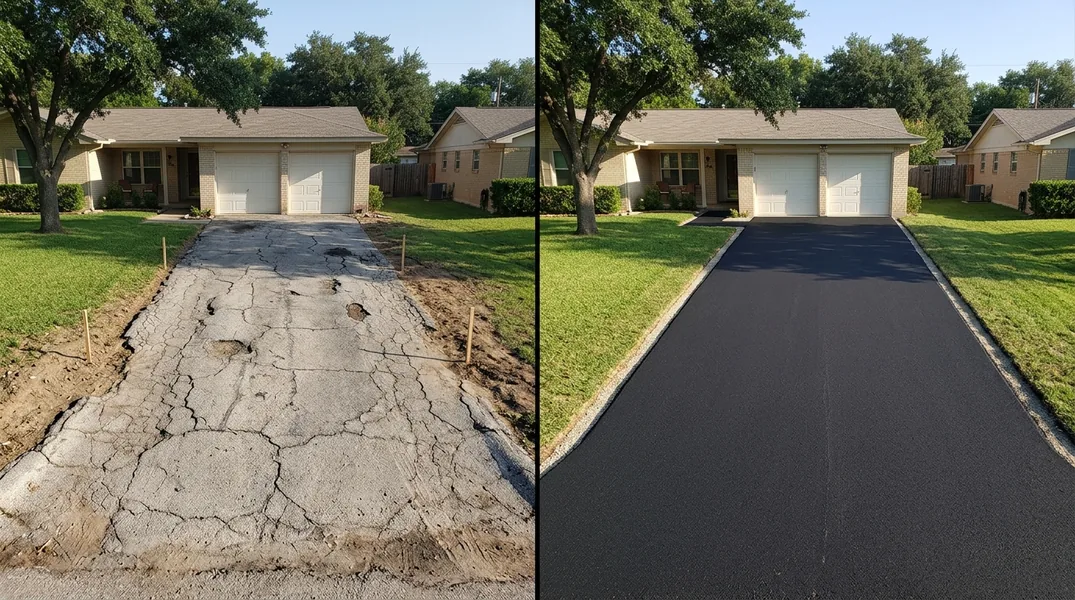
Signs Your Driveway Needs Attention
Your driveway is one of the hardest working surfaces on your property. It endures intense Texas heat, occasional freeze cycles, heavy vehicle traffic, and constant exposure to the elements. Over time, even well-maintained asphalt develops wear and tear that demands a decision: repair or replace?
The first step in making that decision is recognizing the warning signs. Small cracks that appear in your asphalt are often the earliest indicator of trouble. These hairline fractures might seem minor, but they allow water to seep beneath the surface, causing the foundation to weaken and damage to spread rapidly. Potholes are another clear sign that your driveway needs professional attention. These bowl-shaped depressions not only look unsightly but also pose safety hazards to vehicles and can lead to costly suspension damage. If you notice areas where the asphalt has become soft or spongy, or if large sections are crumbling away, these are definitive signals that Driveway Repair or replacement should be scheduled soon.
Surface discoloration and fading are also important to monitor. When your asphalt begins to look dull gray instead of its original dark color, it signals that the protective binder is breaking down. This oxidation process makes the asphalt more brittle and susceptible to further damage. In San Antonio, where summer temperatures regularly exceed 95 degrees, this degradation happens faster than in cooler climates.
When Repair Makes Sense: Pothole Repair and Patching Solutions
Not every driveway problem requires a complete replacement. If your asphalt is less than 15 years old and the damage is isolated to specific areas, Pothole Repair & Asphalt Patching can be a cost-effective solution. This approach works best when damage covers less than 30 percent of your driveway's total surface area and the underlying foundation remains sound.
Professional patching involves more than simply filling a hole with asphalt. The damaged area must be properly cleaned, the edges cut to create clean lines, and the patch material compacted to match the surrounding surface. When done correctly, quality patches can last five to seven years, giving you time before considering a full replacement. However, it's important to understand that patching is a temporary solution. Once you start seeing multiple patches or cracks returning in patched areas, your driveway is telling you it's nearing the end of its useful life.
Another repair option to consider is Asphalt Resurfacing & Overlay. This involves applying a new layer of asphalt over your existing driveway. Resurfacing works well when your driveway's foundation is still stable but the top layer has become worn, cracked, or oxidized. This method costs less than full replacement and can extend your driveway's life by 10 to 15 years.
When Replacement Is the Better Choice
There comes a point when repair efforts become more expensive and less effective than starting fresh. If your driveway is over 20 years old, has extensive cracking throughout (not just isolated spots), or shows signs of base failure like major settling or large areas of soft asphalt, replacement is likely your best investment. When the cost of repairs approaches 50 percent or more of what a new driveway would cost, replacement becomes the economical choice.
Base failure is particularly important to assess. If water has penetrated deep enough to compromise the gravel or soil foundation beneath your asphalt, patching the surface won't solve the underlying problem. You'll continue to see new cracks and potholes forming as the foundation continues to deteriorate. Asphalt Driveway Paving & Installation creates a completely new structure from the ground up, ensuring proper compaction and drainage for decades of reliable service.
Replacement also offers the opportunity to improve your driveway's design and functionality. You can adjust the slope for better water drainage, widen areas that have become too narrow, or expand your parking area. A new driveway also dramatically improves your home's curb appeal and can positively impact your property value.
How Long for Asphalt to Cure: Understanding New Driveway Timelines
One of the most common questions homeowners ask is how long for asphalt to cure. Understanding this timeline is crucial for protecting your investment and following proper maintenance guidelines. The curing process begins immediately after installation, but asphalt doesn't reach full strength all at once.
In the first 24 to 48 hours after installation, your new asphalt will be firm enough to walk on, but it's still vulnerable. The surface may still be slightly tacky, and heavy pressure can leave marks or cause displacement. During this initial period, keep vehicles off the driveway and avoid placing heavy objects on the surface. The asphalt continues to cure as it cools and the binder material fully sets.
How long before you can drive on new asphalt? Most professionals recommend waiting at least 48 hours before driving on a newly paved driveway, though waiting a full week is ideal. In San Antonio's hot climate, asphalt cures faster than in cooler regions because heat accelerates the chemical bonding process. However, even in Texas heat, the asphalt needs time for the aggregate to fully lock in place and for the binder to harden completely. Driving on asphalt too soon can cause rutting, cracking, or displacement of the top layer that may require expensive repairs.
Full strength takes approximately 30 days. During this month-long curing period, avoid sharp turns, rapid acceleration, or parking in the same spot repeatedly. After 30 days, your new asphalt can handle normal driving conditions and heavy loads without concern.
New Asphalt Driveway Care: Protecting Your Investment
Proper maintenance during and after the curing phase is essential for maximizing your driveway's lifespan. New asphalt driveway care begins before the asphalt is even fully cured. During the first week, avoid letting water sit on the surface. While asphalt is porous and allows proper drainage, standing water during the curing phase can interfere with the hardening process. Similarly, keep gasoline, oil, and other petroleum products off the fresh asphalt, as they can dissolve the binder before it has fully set.
Once your driveway has fully cured after 30 days, the real maintenance routine begins. Regular cleaning is the first line of defense against premature aging. Sweep your driveway monthly to remove dirt, leaves, and debris that trap moisture. Pressure wash annually to remove stubborn stains and algae growth. These simple steps prevent the accumulation of materials that can degrade your asphalt over time.
One of the most important maintenance practices is seal coating. How often to seal driveway surfaces is a question every asphalt owner should ask. Professional seal coating should be applied every two to three years. This protective layer shields the asphalt binder from UV rays and oxidation, which are the primary causes of cracking and fading. In San Antonio's intense sunlight, seal coating is particularly valuable. A well-sealed driveway can last 25 to 30 years, while unsealed asphalt typically lasts only 15 to 20 years. The cost of seal coating is minimal compared to the cost of premature repairs or replacement.
Making Your Decision: When to Call San Antonio Asphalt Paving
Deciding whether to repair or replace your driveway doesn't have to be a guessing game. The professionals at San Antonio Asphalt Paving can evaluate your specific situation and recommend the most cost-effective solution. Whether you're dealing with a few isolated potholes or extensive damage across your entire driveway, an expert assessment is the best way to make an informed decision.
The team understands the unique challenges that driveways face in the San Antonio area. Our experience with local climate conditions, soil types, and traffic patterns means we can provide recommendations tailored to your property's needs. We can discuss the pricing for different options and help you understand the long-term value of each choice. Whether repair, resurfacing, or replacement is right for you, we're committed to delivering quality work that protects your investment.
Don't let driveway damage continue to worsen. Contact San Antonio Asphalt Paving today at (210) 485-4679 to schedule your free estimate. Our team will assess your driveway, explain your options, and provide a transparent quote so you can make the best decision for your home. With proper care and professional service, your driveway will remain a strong, attractive part of your property for years to come.
Looking for a professional asphalt paving contractor in San Antonio? San Antonio Asphalt Paving responds fast for all your asphalt paving needs.
Get a Free Quote